
AI, Yes You.

It's hard not to stop thinking about AI these days. I just read that Anthropic is preparing to go public. There is no way around it. We are completely inundated with it. Even if you don't like it or are scared of it, it is here to stay. Just like most of you, I have a love/hate relationship with it. I hate that there is a huge environmental footprint associated with AI, including soaring energy and freshwater consumption. I also feel saddened knowing full well that many blogs produced today are the work of AI rather than a human's creativity. It's hard for some to even decipher what's human versus AI-generated. From my work perspective, it bothers me that so many of the pictures I see on Pinterest and the web have been modified by AI and aren't actually real pictures of rooms! This all bothers me, and what do we do about it? Do we live in fear of what's coming, or do we simply ignore it and hope for the best? Neither feels like much of an answer.
Just last weekend, some friends and I were commenting on AI and our children's futures. We were each concerned about whether our children's professions might eventually be replaced by AI. The fear is real. I feel it. I worry about it when I think about our middle son's university experience in engineering. Will robots eventually take over his job? I worry about it on one hand, but in the same breath, I have hope too. Some might call this complete naivety. I choose not to live in complete fear. That's why I choose to believe that AI can't take over everything. AI can't replace the human experience. There is something profoundly beautiful about the way we experience the world through our memories, relationships, emotions and consciousness.
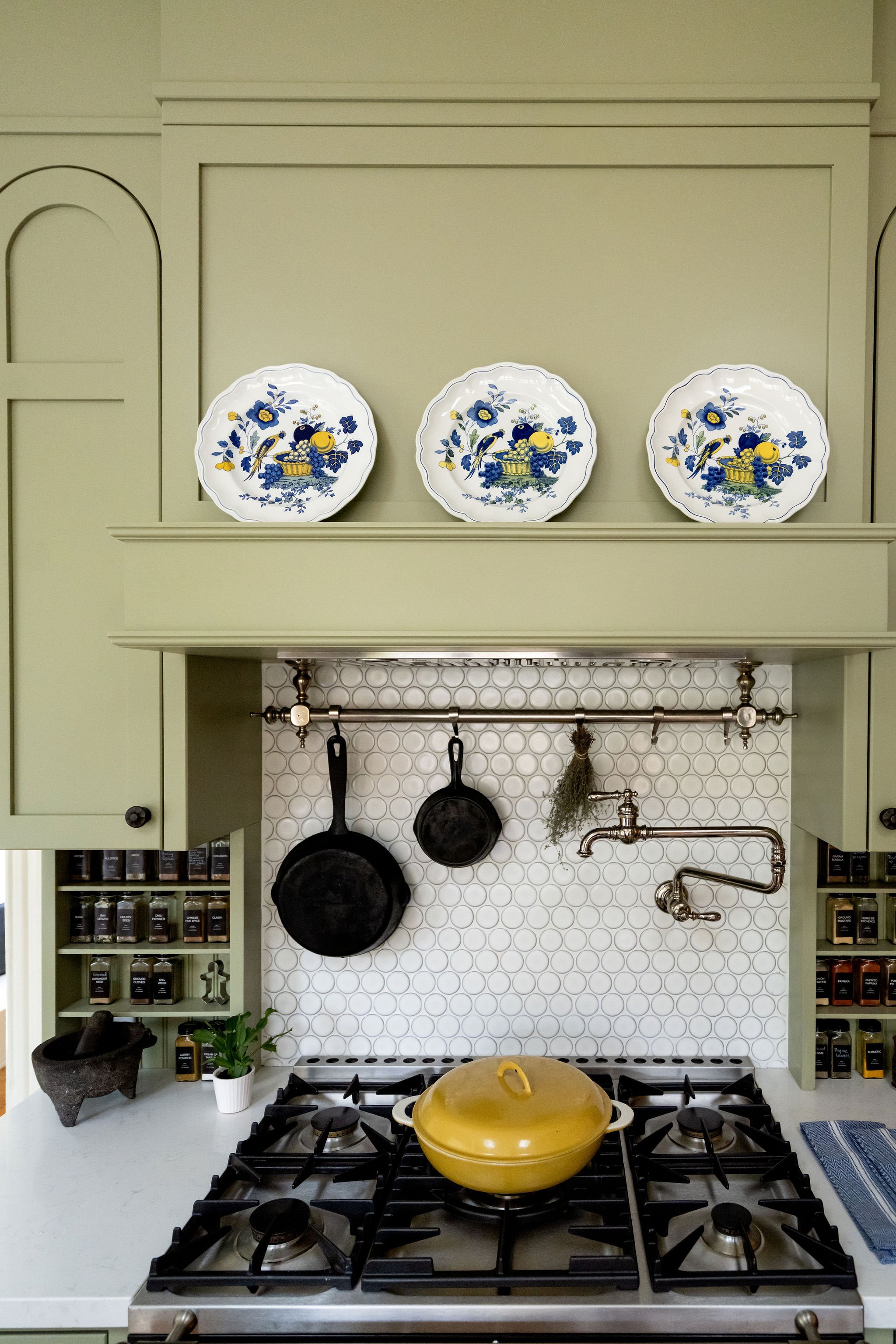
Let's take my profession as a designer, for example. I've been fielding more questions lately about the future of my profession. I'm by no means an AI expert, but from what I understand of its current capabilities, it can create overall concepts for various spaces, including furniture, millwork and even kitchen layouts. It can also help suggest colours, lighting options and accessories. What AI can't do is truly understand what makes a house speak to a client's soul, one that reflects the homeowner's past, present and future. AI doesn't feel what you feel when you enter a room. It can't experience the emotions that arise when interviewing a client about potential finishes and furnishings. And while AI can assist with an overall concept, it doesn't understand the personal significance of incorporating 19th-century architectural elements from your house into a new kitchen design to keep the story of your home alive.
I think we give AI too much credit. We live in a world where we give so much credence to science and technology. Yes, it can do some pretty cool things. There is no denying this. It can also save us a lot of time. Absolutely. We can see how well it writes. We see the grammatically correct version of AI's writing. It's amazing that I don't have to figure out which version of a word I need to use in a sentence. But the thing is, I want us to still remember these grammar rules. I want the world to remember the beauty of the human experience and all that we can offer. We so often forget about the deeper layers of the human experience: intuition, consciousness, emotions and feelings that are evoked by a simple word, a phrase or a memory. It feels good to write this. I feel excited knowing that I was able to write this using my own thoughts and feelings, simply by typing on a computer.
Without a doubt, I love using AI to correct my grammar in a hurry. Truth be told, I asked it to do one more grammar check to see if I missed anything in this blog. But let me be clear, I will not let AI take away the joy and therapeutic effects that writing gives me. I love sitting with a thought, such as this one, and beginning to write to see where it takes me and what thoughts emerge from deep within me. AI can't experience that. And perhaps more importantly, I don't want to lose the ability or desire to experience it myself.
AI can't walk into a room after meeting with clients and instinctively know what feels off in their space. It can source products, but it doesn't have the personal relationship with the local stained glass designer who can work with my clients and me to produce a magnificent piece of art that represents their family. It can come up with ideas or colours for your space and maybe lay out a kitchen for you, but it can't walk through that kitchen with you, understand how you live, and recognize the challenges of creating unique storage solutions and a functional layout when you have three passageways.
Parts of my profession might be replaced by AI in the future. I get that. I accept that. What I don't believe is that there won't be a place for a designer who cares about their clients and wants their home to feel like them and work for them. AI doesn't have a heart and soul, and let us all remember this. It is so easy for us to dismiss professions, even my own, that we don't understand and assume they will be replaced. But will they? I think not, at least not entirely. Instead, I urge you to look at the human element of each profession and ask yourself, will it actually be fully replaced? Take it one step further and evaluate your own relationship with AI. Do you give any thought to the beauty of your human experience? We don't have to fear every technological advancement, nor should we blindly embrace everything it offers. Perhaps the challenge is learning how to live alongside it without losing the very things that make us human. We still have so much beauty to share with each other. I choose the human experience any day.