How to Renovate When You’re Afraid of Getting It Wrong
Fear is Part of Renovating
For the last couple of months, we have been moving full steam ahead, completing the design plans, budgets and everything that is included in our Phase 1 and 2 for projects like the Daisy, Blue Hobbit and Bakewell projects. We work really hard at trying to reduce the stress of our clients through careful planning, budgeting and clear communication. What I’ve come to realize is that fear and the feelings associated with it are just part and parcel of the process of renovating.
Clients come with their own stories, those that they have heard from friends and family as well as those that they have experienced firsthand. Unfortunately, these stories aren’t always pleasant, but they do offer insight into how to better plan and execute.
With almost 20 years of experience designing and renovating, I’ve heard the good, bad and ugly when it comes to renovation stories. Each positive or negative experience that I have encountered through the renovation process has become a learning experience for me. The good news is that I’ve learned a lot over the years and today, we have a well-established process that works to reduce many of the commonly held client fears.
The other piece of good news is I’m here to share with you some tips that will help to alleviate some of those commonly held fears if you are just about ready to embark on or thinking of starting a renovation. I’m here to help make your renovation experience more enjoyable.

1. “What if we can’t afford what we want?”
What if we can’t afford what we want? This fear is one that I hear quite frequently. There is no doubt that renovations are expensive. Product pricing has increased quite substantially over the last 8 or so years, plus the price of labour has also skyrocketed. There is no sugar coating this. It is real and you need to go into your renovation with a full understanding of the costs.
That’s why I like to provide a room budget for each space because the reality might be that you can’t, in fact, do your entire house, but that initial budget provides you with a healthy understanding of what type of budget is entailed to make each room in your house a space of your dreams. These budgets are high-level budgets that include everything from the construction portion to the finishing touches that make a house feel like a home. This overview provides the client with the necessary information to prioritize the spaces that matter most for the first phase and plan for additional projects in the future.
2. “What if we make the wrong design decisions?”
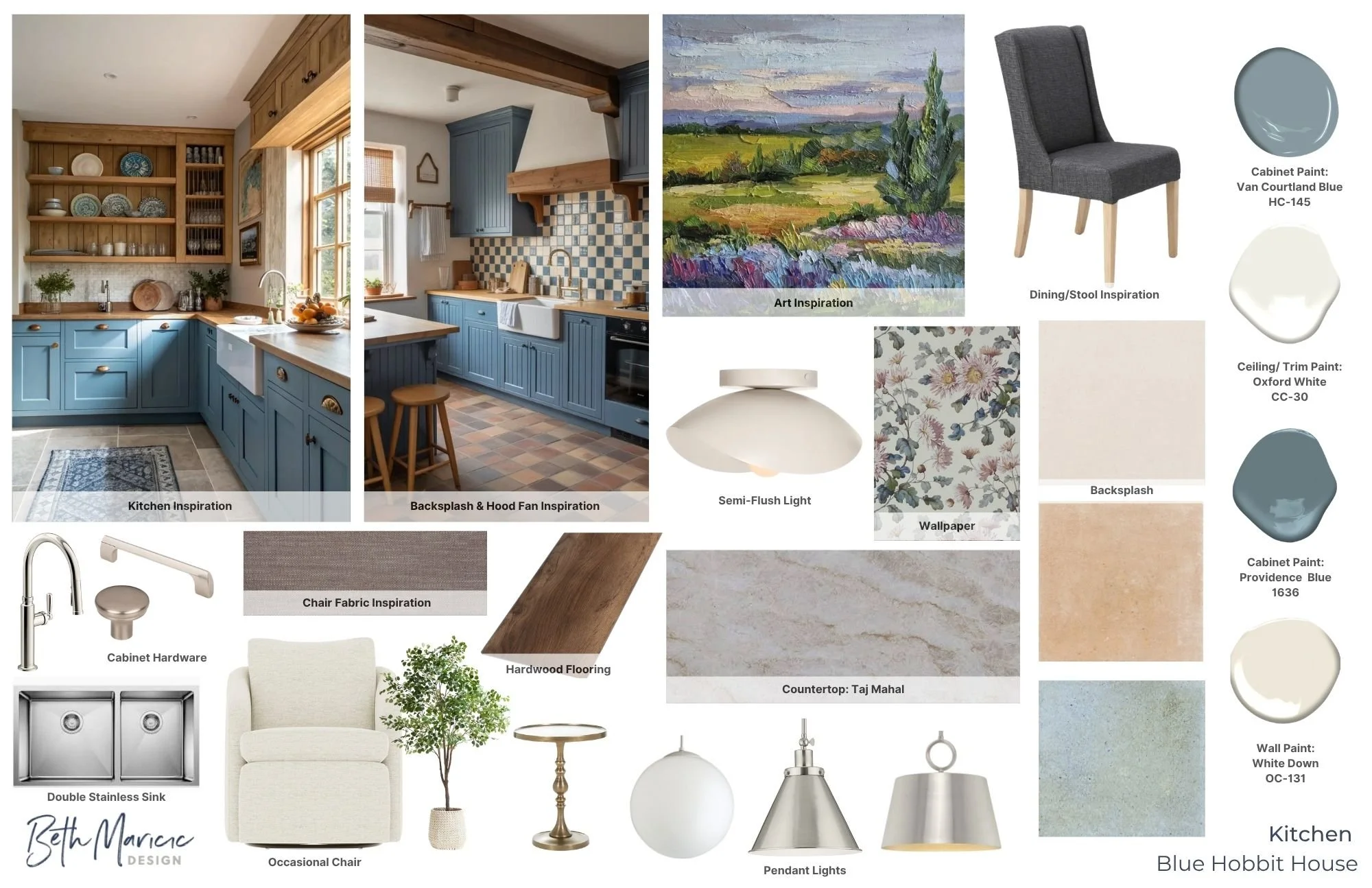
It is really important to have a clear understanding of your layout and all finishes and fixtures before you get started. I do not recommend choosing finishes on the fly. Understanding how finishes and fixtures flow from one room to the next is really important. Our goal is to tell the story of the home and its owners so that there is no way you can make a bad decision. If the design speaks to you and the house, then go with it. Trust yourself and the larger picture.
I like to choose finishes and fixtures that have stamina and do not scream the year that they were chosen. Consider whether or not the product will still look good in 10–15 years. Trends come and go and you want to make sure that your home is about the house and your story, rather than the current trends.
3. “What if we choose the wrong contractor?”
Choosing the right contractor is vitally important. Just like hiring an employee, consider their references and the work that they have done before. If you are able to check out their previous work and speak to clients who have worked with them, I would recommend this. Look beyond price. Does the contractor demonstrate similar values to you? Can you work with them and do you communicate well with each other?
A renovation is entering into a contractual relationship. It is important that you choose to work with a company that you can trust. When I work with clients, I typically recommend a contractor that I have worked with. Someone whose process and craft I trust. We start with the design and a list of specifications that I send to the contractor for initial project pricing. I show previous work of the contractor and my experiences working with them. This decision needs to be about more than the bottom line. It should also be about relationships and values.
4. “What if the renovation takes over our lives?”
To be honest, a renovation of any size is a disruption to your normal routine and there is no way around it. Depending on the size and scope of your renovation and factors including whether you have pets, work from home, or have small children, we suggest different ways of minimizing the impact of the renovation. For large-scale renovations that include new kitchens and bathrooms, consider moving out of your space for a while, or at least during the dustiest, loudest and most disruptive phases, from demolition to when floors have been installed and walls primed. Understanding that most renovation teams work from 8–4ish from Monday to Friday and adjusting your schedule to accommodate their workday will not only speed up the process, but help reduce your stress.
5. “What if we go over budget?”
Plan, plan, plan. I can’t reiterate this enough. The more that you have priced prior to starting, the easier it is to keep your budget in check. I always plan for contingencies too. If $200K is the top of your budget, consider planning for $150K so that you have some breathing room and are able to finish the room with the right furniture and finishing touches. Keep this distinct from the fear of affording the project in the first place. Consider checking in with the construction team about the budget on a monthly or quarterly basis, depending on the overall scope of the project. Any changes during the project need to be clearly documented, priced out and signed off on prior to completion. There is nothing worse than paying for something when you had no idea what the cost was and, had you known it, you might have chosen differently.
6. “What if it doesn’t feel like our home anymore?”
Prior to starting the project, make sure that you have a clear understanding of the story that you want your home to tell. If you are working on an older home, consider what makes it feel special and unique and be sure to incorporate these aspects into the design. The more information you can provide your design team, the better the chance that your home will feel like you. If you don’t have a design team, start with what you love about your home and research ideas that would complement these features and your story. For example, if you live in a heritage home, consider choosing a kitchen style that reflects the age of the house with more modern light fixtures that run with your style and requirements for task lighting. Your home should feel like you and not like a picture from a Pinterest board.
Moving Forward with Confidence
Starting a renovation can feel scary. I get it. Moving into anything in your life that involves change and disruption can feel off and overwhelming. In order to reduce your fears, be sure not to rush the process. Do your due diligence. Spend time finding the right designer and the right construction team. Spend the necessary time to create a design plan that you and your family will adore for years to come. Start the construction process with a clear set of budgetary expectations and understand that renovating is a process. With anything in life, things can come up and that is just part of the process. Trust the professionals that you hired. They are leading your project with your best interests in mind. Don’t let fear stop you from enjoying your home and making it the special place you want it to be.